Skip to content

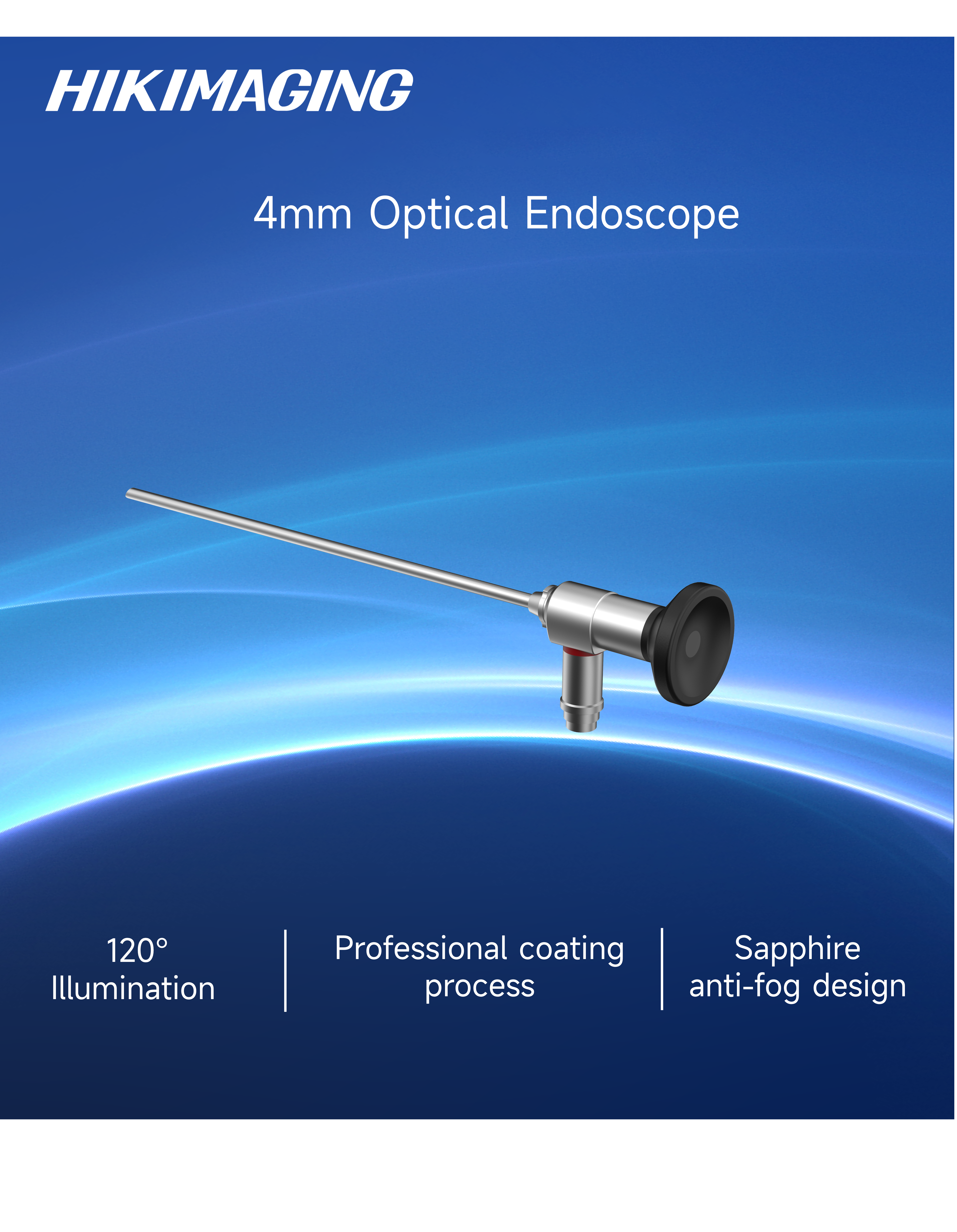
4mm Optical Endoscope Assists in Neurosurgical Transsphenoidal Adenomectomy

Compared to traditional craniotomy, transsphenoidal endoscopic surgery has become an important surgical method for treating sellar tumors due to its advantages of minimal trauma, rapid recovery, and high precision. However, in neurosurgical transsphenoidal surgery, the space behind the sphenoid bone is extremely narrow, and traditional instruments can easily limit the field of vision. Hikimaging’s 4mm optical endoscope, with its superior imaging capabilities, provides crucial assistance to this surgery. In the footage, the 4mm endoscope performs well within the narrow retrosphenoid cavity, with a clear color contrast between the tumor and normal pituitary tissue. The tiny nodules of the adenoma and the capsular vessels are clearly visible. The surgeon precisely dissects the tumor under the endoscope, avoiding damage to the optic nerve and pituitary function, demonstrating the feasibility of “millimeter-level” manipulation. https://www.hikimaging.com/wp-content/uploads/2025/11/1剪辑版本.mp4 When the endoscope penetrates deep into the tunnel-like structure of the skull base, the image remains stable and distortion-free. Cerebrospinal fluid is transparent, and the dense network of small blood vessels is clearly visible, even allowing observation of vascular pulsation. This effect is crucial for avoiding vascular damage and preventing cerebrospinal fluid leakage. https://www.hikimaging.com/wp-content/uploads/2025/11/2剪辑版本.mp4 Hikimaging’s 4mm endoscope, with its “small size, large field of view,” has become the “eye” of transsphenoidal adenomectomy, driving minimally invasive neurosurgery towards greater precision and safety. With the further integration of optical technology and intelligent navigation, future endoscopic surgery is expected to achieve even higher levels of precision and intelligence. (Note: The surgical videos mentioned in this article are all from clinical practice and are for knowledge exchange only.) DownLoad

Read More >

Hikimaging ISP2.5 image processing algorithm provides superior visual support for minimally invasive thyroid surgery

This case demonstrates a minimally invasive thyroidectomy via the axillary approach. Recurrent laryngeal nerve injury is the most common intraoperative injury during thyroidectomy. Surgeons must meticulously dissect and clearly identify the course of the recurrent laryngeal nerve before proceeding with the thyroidectomy. Hikvision’s newly launched ISP2.5 image processing algorithm provides reliable visual assurance for the surgical procedure through superior intraoperative color reproduction and image quality. The video shows that before dissecting the recurrent laryngeal nerve, as the instruments approach the nerve area, the ISP2.5 algorithm can clearly present the capillary structure on the nerve surface through the translucent connective tissue, helping the surgeon to predict the nerve’s course in advance and better protect the recurrent laryngeal nerve. https://www.hikimaging.com/wp-content/uploads/2025/11/1-找到喉返神经.mp4 After completing the nerve dissection, the white recurrent laryngeal nerve and the red capillaries attached to it form a sharp contrast in the surgical field. The superior color reproduction and high-definition image quality provided by the ISP2.5 algorithm safeguard the recurrent laryngeal nerve during thyroidectomy. https://www.hikimaging.com/wp-content/uploads/2025/11/2-解剖.mp4 DownLoad

Read More >

Super-resolution technology empowers electronic mirror innovation – Hikimaging’s precise imaging practice

Background In the current endoscopy industry, electronic endoscopes (such as ureteroscopes and bronchoscopes) generally lag behind rigid endoscopes (such as laparoscopes) in terms of resolution indicators. The resolution of mainstream electronic endoscope sensors is mostly concentrated at the 400×400px (160,000 pixels) level, and the details and information presented are relatively low, making it difficult to meet the needs of refined diagnosis and treatment scenarios such as early gastrointestinal cancer screening (which requires identification of lesions <5mm). Super-resolution reconstruction (SR) technology can break through the physical limitations of sensors and become an important research direction for improving the imaging quality of electron mirrors. 2. Principle The original 400x400px low-resolution image is processed by a deep learning-based SR algorithm, achieving a 2x upsampling, resulting in an 800x800px high-resolution image output. Compared to traditional imaging, the super-resolution algorithm’s key feature is its built-in super-resolution module, which performs super-resolution processing on the input image and outputs a high-resolution image. This algorithm improves quantifiable imaging data in multiple dimensions, increasing resolution by a factor of four from 160W to 640W, improving line-of-sight metrics by 50%, and boosting signal-to-noise ratio by 22%. 3. Effect Display Hikimaging applies super-resolution technology to the 2302 series CCU, supporting the access of a full range of electronic scopes such as ureteroscopes, bronchoscopes, and hysteroscopes, effectively improving the current situation of unclear electronic scope imaging. (1) Renal pelvis under ureteroscopy: fine structures are clearly visible. https://www.hikimaging.com/wp-content/uploads/2025/08/1输尿管镜超分效果下的肾盂-细微结构纤毫毕现.mp4 (2) Kidney stones under ureteroscopy: the internal structure of the stone is clear. https://www.hikimaging.com/wp-content/uploads/2025/08/2输尿管镜超分效果下的肾结石-结石内部结构非常清晰.mp4 DownLoad

Read More >

Hikimaging Ureteroscopy Solution——High-definition Vision Facilitates Ureteroscopic Lithotripsy

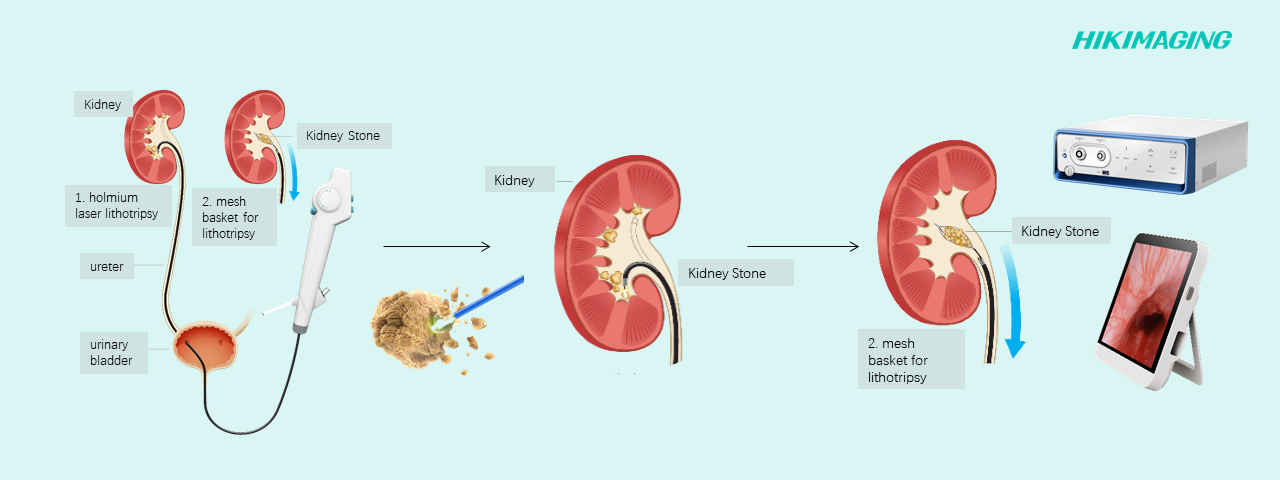
    In the field of urology, ureteroscopy has become an important instrument for minimally invasive treatment of upper urinary tract stones. The flexible ureteroscope can directly explore the location, size, shape and surrounding mucosal condition of stones through the natural cavity of the human body (urethra-bladder-ureter). Compared with traditional percutaneous nephrolithotomy(pcnl), FURS significantly reduces the risk of bleeding and postoperative pain, shortens the recovery time, and has become the preferred treatment option for many patients with kidney stones.     In FURS, clear and stable endoscopic imaging is the key to successful surgery. Blurred and noisy images will make it more difficult for doctors to identify stones and distinguish between tiny blood vessels and mucosal structures, which will not only prolong the operation time, but also pose the risk of accidental injury to tissues and residual stones.     In this issue, we will use the actual intraoperative images of kidney stone holmium laser lithotripsy performed by “Hikimaging ureteroscopy solution”to intuitively experience the surgical process and the technological innovation brought about by high-definition imaging. Ureteroscopy to explore the renal pelvis and accurately locate stones     The ureteroscope needs to be fully lubricated before insertion to reduce damage. Under the guidance of the guide wire, the target position is successfully reached through the urethra, bladder, and ureter. Doctors can flexibly control the endoscope through foot pedals or handles to systematically explore and locate the stones. https://www.hikimaging.com/wp-content/uploads/2025/07/1输尿管镜探查肾盂,找到结石.mp4 2. Ureteroscopy to explore the renal pelvis and accurately locate stones     After confirming the target stone, the holmium laser fiber is inserted through the working channel of the soft mirror. The laser spot is precisely focused on the surface of the stone, and the “fragmentation” strategy is used to break the stone into sufficiently small particles. https://www.hikimaging.com/wp-content/uploads/2025/07/2剪辑版本.mp4 3. Postoperative reexamination to ensure that there are no “stones”     After lithotripsy is completed, the renal pelvis and target calyces are examined again with a ureteroscope to ensure that there are no residues and to check the degree of tissue damage. https://www.hikimaging.com/wp-content/uploads/2025/07/3剪辑版本.mp4     Hikimaging ureteroscope solution, through the unique super-resolution technology, effectively improves the clarity of electronic mirror imaging. It can be used in combination with a variety of host options such as portable host and dual-mirror host, and can be flexibly used in consulting rooms and operating rooms. It provides a powerful tool for urologists and allows minimally invasive surgery to move further into a new era of “seeing clearly and doing accurately”. DownLoad

Read More >

Hikimaging multi-color fluorescence for lymphadenectomy in gynecological cancer

Lymphadenectomy in gynecological cancer has long faced the challenge of accurate identification and complete removal. Micro-metastases, anatomical variations, and the hidden nature of deep lymph nodes make it very easy for traditional methods that rely on palpation and visual inspection to miss diseased tissues, affecting patient prognosis. Fluorescence imaging technology improves the accuracy and safety of lymphadenectomy through real-time visualization. Green fluorescence: real-time imaging, rapid targeting of target lymph nodes Doctors do not need to rely on preoperative imaging memory or repeated palpation. The fluorescent screen directly displays the location of the target lymph nodes. Especially for obese patients or superficial lymph nodes, the green fluorescence can quickly guide the surgeon to the target, shorten the operation time, and clearly mark the lymph node boundaries to reduce misoperation of surrounding normal blood vessels and nerves. https://www.hikimaging.com/wp-content/uploads/2025/07/1.绿色荧光:快速锁定淋巴结位置-2.mp4 White and multi-color fluorescence switching: Targeting deep lymph nodes Accurate identification of deep pelvic lymph nodes (such as obturator foramen and iliac vessels) is a difficult point in gynecological cancer surgery. Huiying’s white light and multi-color fluorescence switching function can clearly “light up” the previously hidden lymph nodes, avoiding missing key lesions. https://www.hikimaging.com/wp-content/uploads/2025/07/2.白光和多色荧光切换:锁定深处淋巴结.mp4 Multi-color fluorescence: Assists in complete removal of lymph nodes By observing the continuity and integrity of the fluorescent signal, the surgeon can intuitively determine whether the lymph node capsule is destroyed, whether satellite lesions exist, and whether the lymphatic drainage area has been cleared thoroughly enough to minimize the risk of residual tiny lesions. https://www.hikimaging.com/wp-content/uploads/2025/07/3.多色荧光:助力完整切除淋巴结-2.mp4 Hikimaging has launched a series of fluorescent products such as 4K fluorescent and 3D fluorescent, which greatly improve the development effect through algorithms. At the same time, the self-developed optical mount effectively suppresses stray light interference and significantly improves the problem of fluorescent light leakage. DownLoad

Read More >

Hikimaging assists single incision laparoscopic cholecystectomy

    Traditional laparoscopic surgery requires 3-4 incisions, which is very traumatic and slow to recover from. Single incision laparoscopic surgery (SILS) only ues a single incision to complete the surgery, which greatly reduces the trauma of surgery and greatly improves the patient’s recovery speed after surgery. This issue explains the entire SILS surgery process. Step 1: Dissect the gallbladder triangle:   Accurately locate the gallbladder triangle area. Dissect the gallbladder triangle to expose clear blood vessels and bile duct structures. https://www.hikimaging.com/wp-content/uploads/2025/06/单孔腹腔镜胆囊切除术-解剖胆囊三角1.mp4 Step 2: Clamp and cut off the cystic artery:Use clamping instruments to block blood flow, avoid bleeding during surgery, and ensure a clear surgical field of view https://www.hikimaging.com/wp-content/uploads/2025/06/单孔腹腔镜胆囊切除术-夹闭胆囊动脉1.mp4 Step 3: Clamp and cut off the cystic duct:  Safely separate and cut off the cystic duct to completely disconnect the lesion from the bile duct system. However, the integrity of the bile duct system must be ensured. https://www.hikimaging.com/wp-content/uploads/2025/06/单孔腹腔镜胆囊切除术-夹闭胆囊管.mp4https://www.hikimaging.com/wp-content/uploads/2025/06/单孔腹腔镜胆囊切除术-切断胆囊管.mp4 Step 4: Separate the gallbladder:Gently peel off the gallbladder bed and completely remove the diseased gallbladder https://www.hikimaging.com/wp-content/uploads/2025/06/单孔腹腔镜胆囊切除术-分离胆囊1.mp4 Hikimaging endoscope system empowers surgeons with 4K imaging system + intelligent equipment, making cholecystectomy safer, more precise and more efficient ! DownLoad

Read More >

Contact Sales

Let’s know about your issue so we can connect you with the right team quickly.